This article was originally thought up and written about a year ago, but there have been some updates through the editing process along with a postscript from this past November. For a preview, here is the abstract:

Producers of Al-Qaeda inspired propaganda have shifted their operations in recent years from closed membership online forums to mainstream social networking platforms. Using social network analysis, we show that behind the apparent proliferation of such sources, YouTube account holders associated with incarnations of the British al-Muhajiroun collude to post propaganda and violent content. European groups commonly use American platforms and domain names registered with American companies. Seeking shelter under speech rights granted by the First Amendment, they evade European laws against incitement and hate speech.

Click here to read the entire piece.

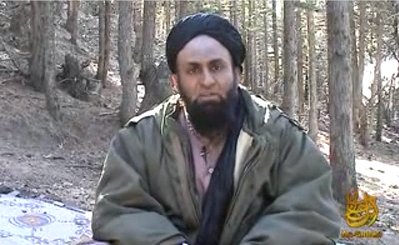
Over the past year or two, with the death of many senior leaders as well as al-Qa’ida’s longing for religious legitimacy, Khalid bin ‘Abd al-Rahman al-Husaynan (Abū Zayd al-Kūwaytī) has risen in the ranks and has been described by Jarret Brachman as “Zawahiri’s in-house version of Awlaki” and by Christopher Anzalone as part of al-Qa’ida’s “missionary vanguard.” I would simply describe al-Husaynan as al-Qa’ida’s head of da’wah (the call to Islam/proselytization). Surprisingly, little has been written about al-Husaynan.

With the rise of Abu Yahya al-Libi from 2005-2008 many saw al-Libi as a potential Bin Ladin successor or at least al-Qa’ida’s main religious mouthpiece. Indeed, al-Libi has touched upon religious areas and performed al-Qa’ida’s khutabahs for ‘Id al-Fitr and ‘Id al-Adha, but al-Libi has also been a figure that discussed political issues just as much as religious ones. In contrast, al-Husaynan more or less has stuck to purely religious topics, not mixing his lectures with political overtones. This is important to note because many in the Muslim and non-Muslim world have questioned al-Qa’ida’s Islamic character (and not to mention the fact that 9 in 10 individuals al-Qa’ida has killed over the years have been Muslims) and bona fides. As such, one could argue that al-Husaynan is al-Qa’ida’s answer to its critics by showcasing a purely religious side of its media releases. In 2010, during the Muslim holy month of Ramadan, al-Husaynan released twenty-eight lessons related to religious life that one should ponder during Ramadan. Similarly, in April 2011, al-Husaynan began a series of “Da’wah Lectures” dealing with similar purely religious topics. For instance, the most recent was “Lecture 12: The Virtues of the Night Prayer.”

Besides his lectures though, not much is known about al-Husaynan’s background besides that he is from Kuwait and was a religious teacher employed by Kuwait’s Ministry of Religious Endowments and Islamic Affairs. As such, Issue #7 of Hitin’s Urdu Magazine (translated by Flashpoint Partners into English) that interviewed al-Husaynan sheds more light on his background, religious upbringing, reason for joining al-Qa’ida, and general worldview.

Background and Education

To begin the interview, Hitin Urdu Magazine describes al-Husaynan as “responsible for the religious training and the salvation of the soldiers of the al- Qa’ida network.” This provides a little more knowledge, besides his online media releases, what his actual role is in al-Qa’ida Central. The magazine then asks about al-Husaynan’s background. He was born in 1966 putting al-Husaynan at the age of 45 or 46 depending what month his birthday is in. In terms of key jihadi events, al-Husaynan was in his teens during the anti-Soviet jihad, early twenties during the Gulf war, and in his mid-thirties during 9/11 and the beginning of the Iraq war. Al-Husaynan continued by stating:

[I was] raised in such a household that gave special attention to the knowledge of religion. Our father regularly trained us to pray in a congregation. This was the time when I was admitted into a madrassah that was superior to others when it came to the education of Islamic laws. Then I went to the Arabian Peninsula where I completed my religious studies from a famous institution.

Al-Husaynan does not mention the specific institution, but he later remarks that he started his religious studies in 1986 and focused on Islamic theology and jurisprudence. He mentions he studied under Shaykh Muhammad ibn al-Uthaymin for three years. Therefore, al-Husaynan most likely attended Imam Muhammad ibn Saud Islamic University, which was where al-Uthaymin was on the faculty of Shari’ah. Al-Uthaymin, along with ‘Abd al ‘Aziz ibn Baz and Muhammad Nasir ad-Din al-Albani, all three of whom passed away between 1999 and 2001, are considered three of the most eminent Salafi scholars of the modern era. Additionally, al-Husaynan stated he also studied for three years under Shaykh Sulayman bin Nasir al ‘Alwan, who is considered a favorite cleric of individuals that sympathize and support al-Qa’ida’s worldview. In the second edition of “A Mujahid’s Bookbag,” a collection of works that are recommended for jihadis to read on the online forums, al ‘Alwan’s works were listed in it 101 times, making him one of the top five ideologues in the “bookbag.” On a side note, al-Husaynan only had three works listed in the second edition (released in December 2009), while he had forty-three in the third and most recent edition (released in June 2011), further illustrating al-Husaynan’s rise in significance over the past few years (in contrast, Abu Yahya al-Libi went from 25 to 32 to 45 works listed in the three editions). As such, al-Husaynan was schooled in the orthodox Salafi school of thought by al-Uthaymin, as endorsed by the Saudi state, but was also exposed to more radical interpretations of Salafism when studying under al ‘Alwan.

Teaching Back in Kuwait

The Hitin Urdu Magazine interview then moves onto questions related to his time back in Kuwait when he begins to teach. Al-Husaynan states his main motivation for calling individuals to Islam is based on this saying from God: “Who else has better words to say than the one who invites people towards God, do good deeds and say, no doubt, I am from amongst the Muslims.” His style in teaching is also touched upon. Some have noticed and described al-Husaynan in his video lectures for al-Qa’ida as cartoonish. Based on the interview, he believes it is a helpful way to grab the attention of the youth (emphasis mine):

The main focus of our proselytizing and training were the youths. And because most of the youngster do not come to masjid (mosque) to offer their prayers, we would go to the colleges and universities to deliver sermons there. We would present to them incentives and deterrents in the style, which Qur’an adopts. To get their attention and in turn change their thinking we would first make them get familiar to us. For this purpose, we would joke and get funny during our speeches. And the truth of the matter is that once a person starts loving someone, he accepts what he is told and is also influenced easily. That’s why we would converse with them in an exciting way. We would make them laugh and kid around with them. Thank God this method was very effective on the youth.

During his time in Kuwait, al-Husaynan also states that he prepared pamphets for da’wah, providing some examples: (1) More than 1000 day-to-day practices of the Prophet; (2) More than 1000 day-to-day prayers; (3) Answers to 1000 problems of the women; (4) How do we get to the destinations of Allah’s people; (5) This is how good and pious are supposed to be; and (6) How are you preparing for your reckoning?

Entering the Fields of Jihad

According to the interview with Hitin Urdu Magazine, al-Husaynan decided to go to Afghanistan to join with the “mujahidin” sometime in 2007 (1427 H). He felt obliged and points to this edict from God that finally pushed him:

Oh Prophet [Muhammad], tell them that if you fear for the loss of your fathers, your sons, your brothers, your wives, your families, the goods that you earned and your trade, and if these are the things that are more dear to you that fighting in the way of your God (jihad fi sabil Allah) and His Prophet [Muhammad], then wait until calamity from God arrives on you. And God does not bring unrighteous to the right path.

Al-Husaynan further explains his reasoning for going to Afghanistan: “jihad in the name of God is more important to me than anything else. And these can’t be achieved through talk, sermonizing or listening to sermons, but by illustrating through sacrifices, self-giving, migration and jihad.” Therefore, although he felt his teaching methods were reaching the youth of Kuwait, apparently it was not enough. Moreover, al-Husaynan believes that “jihad is the shortest way of reaching heaven so we give our lives for it, and become martyrs in the path of God. With these thought I opted for the way of jihad and came here.” Thus another aspect for joining the “mujahidin” was to attain martyrdom and securing his spot in heaven.

The Take Away

The Hitin Urdu Magazine interview concludes with more politically oriented questions and boiler plate answers, which if one is interested in reading can be read in the above link to the interview. More importantly, the interview points to al-Husaynan having some legitimate religious bona fides compared to Abu Yahya al-Libi’s, which are still shrouded in some mystery. It is no surprise then that al-Qa’ida is primarily using al-Husaynan in the role of the head of its da’wah (or religious outreach). Whether it will help with recruitment and recapturing its image as well as portraying itself as a truly Islamic movement that remains to be seen. For once in al-Qa’ida’s history, though, it has an individual in al-Husaynan that has the educational experiences and knowledge that could provide it at least nominal religious credibility. The jury is still out on if the damage has already been so excessive that it does not matter anymore. That said, in light of potential openings in Yemen and Syria, as well as the possibility of disappointment from failed expectations in countries like Egypt, Tunisia, and Libya, al-Husaynan could provide al-Qa’ida the religious swagger it needs to gain sympathy from some newly or future disillusioned youth.

Yesterday, the salafi group Ansar al-Shari’ah in Tunisia provided aid in a convoy to residents in the city of Haydrah (Haïdra) in West Central Tunisia who have been hit hard by extremely cold weather. This may give pause and alarm to the elites in Tunis. As Erik Churchill, based in Tunisia and an independent development consultant, pointed out to me: “The French speaking elites have been patting themselves on the back the last few weeks for their ability tomobilize aid to these regions. Ansar al-Shari’ah’s work shows that the elites (both secular and an-Nahdha) do not have a monopoly on this kind of social work.”

Over the previous few weeks, there has been a major cold front, which included sub-zero temperatures and snow in northwest and west central Tunisia in regions within the governorates of Jendouba and Kasserine. Due to the remoteness of some of the locations and coinciding with many strikes and protests by factory and distribution center workers, there has been a major shortage of essential goods to stay warm and replenish food supplies. According toTunisia-Live:

Despite the fact that the new interim president and members of the interim government have visited several regions of the country in the past week, no efficient measures were taken to deal with the scarcity of essential goods in the North West.

However, while the government has failed to provide an answer, Tunisian citizens have tried to create solutions. A group of Tunisians living in Germany started a volunteering company, using social networking to collect covers and clothes for those struggling with the cold in the deprived rural areas of the north-west. The group of Tunisian-Germans were looking for more volunteers within Tunisia to help them deliver covers and clothes to families in need.

Additionally, Qatar and UAE both sent airplane loads of supplies. There are also indigenous Tunisian groups that have attempted to assist, including El Kolna Twensa, Le PaCTE Tunisien, the Enfidha airport workers, and the Assabah/Le Temps newspaper group. Part of the issue is the lack of access due to roads being blocked by as many as 2.5 feet of snow in very rural areas. Although efforts were difficult, an-Nahdha did mobilize some of its supporters to help with relief efforts.

The secular-affiliated relief groups and organizations have targeted its aid more so to the governorate of Jendouba, since that region is viewed as more independent, moderate and socially liberal; whereas areas in the governorate of Kasserine are seen as more amenable to the message of a group like Ansar al-Shari’ah in Tunisia. Although the snow has receded in some of the areas, the temperatures remain cold and residents such as in the city of Haydrah, which is in the governorate of Kasserine and about an hour northwest of the city of Kasserine, are still struggling to survive the harsh conditions.

On Saturday February 18th, the non-violent jihadi group Ansar al-Shari’ah in Tunisia (that has connections to al-Qa’ida’s global jihadi online network) announced on its Facebook page that it was planning a convoy to take aid to suffering brethren to the town of Haydrah on Monday the 20th. Prior to driving from Kasserine in a convoy of trucks and vans, the spiritual leader of Ansar al-Shari’ah in Tunisia Shaykh Abu Ayyad al-Tunisi emphasized to his followers the wajib (obligation) of providing aid to those in need as an Islamic duty and that these services were an aspect of jihad fi sabil Allah (in the cause of God), which would hopefully lead eventually to the creation of an Islamic state or Caliphate. One can see a variety of pictures from Ansar al-Shari’ah in Tunisia’s da’wah activities that assisted the residents in Haydrah below.

Interestingly, Ansar al-Shari’ah in Tunisia is filling the vacuum of the Tunisian government, which is dealing with issues related to the economy, writing the constitution, and maintaining order while also redressing many grievances workers have. This type of social work had been what brought popularity to groups such as the Muslim Brothers in Egypt (and to a lesser extent an-Nahda in Tunisia because although Ben Ali’s former regime was corrupted they provided services far better than the Egyptian government). Assisting in social work gave space to preach ones ideology. As a result, if Ansar al-Shari’ah in Tunisia is able to continue with similar efforts along with protesting cultural policies (the niqab and appropriate levels of freedom of expression/speech), one may see its small movement gain wider popularity. This could be especially true in rural areas where many citizens are more conservative, religious, and extremely disillusioned with the governments lack of attention to it. Churchill concurs stating: “an-Nahdha is very concerned that their social bona fides could be usurped by more extreme elements.”

Although in differing contexts, one sees similar efforts to provide services and governance in Yemen by Ansar al-Shari’ah in Yemen as well as Harakat al-Shabab al-Mujahidin in Somalia. This differs from previous methods by jihadis, which did not emphasize providing social services and basic needs like the case of al-Qa’ida in Iraq or even al-Qa’ida Central to local populaces. From this, a potential pattern is emerging whereby jihadis have learned the valuable lesson of providing for locals to curry more support versus blindly just calling for jihad and rhetorically speaking about a future Islamic state. In short, they are actually (dare I say) on a minuscule level providing a positive good versus just wrecking havoc through audacious suicide attacks and bombings. Either way, not only should the secularists in Tunis be worried about the potentially rising popularity of anti-systemic pan-Islamists like Ansar al-Shari’ah in Tunisia, but an important aspect of an-Nahda’s raison d’être and credibility is being challenged in the same way an-Nahda did to the old regime.

Convoy on its way to the City of Haydrah from the City of Kasserine

Unloading Aid From the Trucks and Vans

Distribution of the Aid

‘Asr (Afternoon) Prayer Following the Delivery of Aid

Ansar al-Shari’ah’s Caravan of Aid Leaves Haydrah

This past Thursday, on February 16, a group of around twenty individuals claiming to be part of the Free Syrian Army (FSA), released a video message to YouTube announcing the formation of a new battalion named the al-Bara’ ibn Malik Martyrs Brigade. It should be noted that during the Iraq war, al-Qa’ida in Iraq (AQI) also named one of their battalions the al-Bara’ ibn Malik Martyrs Brigade. There is no definitive proof that the new battalion established by the FSA is connected with the old al-Qa’ida in Iraq networks. That said, one should be cognizant of the expansive facilitation networks there were for foreign fighters attempting to join the Iraq jihad in Syria.

There are many layers to unpack from the video itself as well as the name chosen for the martyr brigade and its potential illusions.

With the recent revelations that al-Qa’ida was allegedly behind a series of suicide bombings in Syria over the past few months, along with Ayman al-Zawahiri’s recent video giving support to the Syrian “mujahidin;” much worry has risen over the specter of al-Qa’ida influencing and/or hijacking the opposition movement in Syria that hopes to topple Bashar al-Asad and his current regime.

The Flags

Many will point to the flag in the background used in the above video as a sign that these individuals are indeed al-Qa’ida since it looks strikingly similar to the one used by al-Qa’ida’s Islamic State of Iraq (For more background on al-Qa’ida’s use of flags and its context in Islamic history read here):

FSA background flag

Islamic State of Iraq's flag.

Islamic State of Iraq's flag.

Indeed, it is a worrying sign. At the same time, one should also note that in the above video, they also bear the old Syrian flag:

As such, for any student of al-Qa’ida and jihadism, the use of a Syrian flag shows direct support of a nationalist project, which is contrary to al-Qa’ida’s worldview. This is because the nation-states carved out were established not by God, but rather by the British and French. From this, one could posit that the al-Qa’ida looking flag used in the above video has become popularized to a broader audience then just a global jihadist one. More specifically, “the Che Guevara-ing” of the flag insofar as it has just become a symbol of resistance than necessarily a sign that the group has allegiance to al-Qa’ida. At the same time, the name used for the martyrs brigade (as AQI did, too) may abrogate or disprove this potential theory.

Who is al-Bara’ ibn Malik?

Prior to discussing the significance of the name of the martyrs brigrade in the context of al-Qa’ida, it is worthwhile to delve into the figure al-Bara’ ibn Malik to try and better understand why the FSA (and AQI) would invoke this figures name. Ibn Malik was one of the Muslim prophet Muhammad’s sahabah (companions) and considered an ansar (supporter) from the tribe of Banu al-Khazraj since they established relations with Muhammad’s nascent movement of mu’minin (believers) following the hijra to Medina (originally Yathrib). Ibn Malik is the brother of the famous sahabi Anas ibn Malik, an aide to Muhammad and who is one of the major narrators of hadith.

al-Bara’ ibn Malik originally took part in the Battle of Yamamah, which was part of the Riddah (apostasy) wars following the death of the Muslim prophet Muhammad. After the ascension of Abu Bakr as-Sadiq as the first Caliph some tribes and individuals apostatsized from Islam and attempted to return to their original religious practices. Abu Bakr called for war against them leading to a series of battles in 632-634 CE/11-13 H. The Battle of Yamamah is most famous for the deaths of a large portion of Qur’anic reciters, which led Abu Bakr to start the codification of the Qur’an into a written mushaf, since beforehand the Qur’an was recited orally. In the latter part of the Battle of Yamamah, when the opposition forces led by Musaylimah (referred in Islamic historiography as al-Kadhab or the Liar) were beginning to lose the battle they hid behind a gated garden. Prior to launching an assault on the garden, al-Bara’ ibn Malik stated: “يا أهل المدينة، لا مدينة لكم اليوم، إنما هو الله، والجنة” or “Oh People of al-Madinah, there is no al-Madinah for you after this day. There is only Allah, then Paradise.” Ibn Malik was hoisted upon a fellow soldiers shield to try and jump over the gate, which he succeeded. He sustained wounds, but was able to break open the gate allowing the rest of the Muslim army to defeat Musaylimah’s men. The episode would later refer to the “Garden of Death.” Although Ibn Malik had injuries, he recovered and later fought and was “martyred” in the Battle of Tustar against the Persian Empire in 640 CE/19 H.

There are three key points that should be highlighted from the above description of al-Bara’ ibn Malik: (1) he had an important role in defeating “apostates;” (2) his quote from above shows his willingness for martyrdom in the face of tough odds; and (3) he fought against the Persian Empire, which although Persians were not Muslims or Shi’a for that matter at that time one can imagine the symbolism of Ibn Malik fighting against the Persians. Jihadis today describe Shi’a (many being Persian) today as rawafid (Dissenters/Defectors/Deserters), which is a derogatory term, and do not believe they are true Muslims.

Contextualizing al-Bara’ ibn Malik Martyrs Brigades Today

Returning to the modern context, in both cases (AQI and the FSA), the name of the martyrs brigade fits and alludes to the three points made above regarding the biography of Ibn Malik. Regarding the first point, in both Iraq and Syria the fighters believe they are fighting apostate regimes. In Iraq against the ascendent Shi’a Mahdi Army and newly formed majority Shi’a Iraqi government and in the case of Syria al-Asad’s Alawite regime (seen as a sect of Shi’a Islam and viewed as heretical by even non-jihadi Sunni Muslims). As for the second point, it is quite obvious that they are martyrdom brigades and are therefore willing to sacrifice themselves in the face of great odds. And thirdly, the Iranian government was viewed in the Iraq war as assisting the Shi’a militias, while in the current context in Syria, the al-Asad regime is a known proxy of the Iranian regime. As such, in a round about way, in both the Iraq and Syrian versions of the al-Bara’ ibn Malik Martyrs Brigades they would be fighting the “Persian Empire” similar to Ibn Malik himself.

General Concluding Remarks About the Current State of Jihadism in Syria

The establishment of the FSA’s al-Bara’ ibn Malik Martyrs Brigade should give pause to talk of blindly arming the FSA as an alternative to the failed resolutions in the UN Security Council. That said, it is believed the FSA is a loose confederation without much centralization and therefore this battalion is most likely independent and doing its own thing. With the news of the potential release of Abu Mus’ab al-Suri, the creation of a new local jihadi group Jabhat al-Nusrah, and reports of a foreign fighter from Kuwait being killed in Syria, it is clear Syria has become another important front in the jihadi war. The penetration of al-Qa’ida in Iraq into Syria and potential of foreign fighters arriving, should be watched closely. At the same time, ones support for the uprising to defeat the authoritarian al-Asad regime should not be looked at completely through the prism of al-Qa’ida nor should it preclude or discredit any attempts for supporting some elements within the opposition. There are certainly risks involved, but identifying and vetting elements within the Syrian opposition is something that needs to be further acted upon in a precise manner versus providing weapons haphazardly just because of horrific scenes of slaughter on YouTube that one views without fully thinking through the potential second and third order consequences.

An old face appears poised to play a new role in the jihadist movement. On Feb. 2, plugged-in online jihadists confirmed that one of the jihad’s most original and respected theoreticians, Abu Musab al-Suri, had been released from a Syrian prison.

While not a household name like Osama bin Laden, Suri enjoys a burgeoning influence on the global jihadist movement, and particularly those based in the West. The veteran Syrian jihadist, whose real name is Mustafa bin Abd al-Qadir Sitt Maryam Nasar, is best known for his 1,600-page treatise Dawat al-Muqawamah al-Islamiyyah al-Alamiyyah (Call of Global Islamic Resistance), which articulates a strategy of decentralized jihad, rather than one that depends on clandestine organizations. If there is an architect of the jihadists’ post-9/11 line of attack, it’s Suri.

Suri’s ideas have been popularized in jihadist circles over the past few years. They have been taken up by prominent figures like the head of al Qaeda’s media department, Adam Gadahn, and Yemeni-American jihadist Anwar al-Awlaqi, as well as being featured by Samir Khan in al Qaeda in the Arabian Peninsula’s Inspire Magazine.

Rumors about Suri’s status had been flying around online since Dec. 23, when Sooryoon.net, a Syrian opposition newspaper, published a story saying Suri and his assistant Abu Khalid had been released. It is surprising that Syrian President Bashar al-Assad would release a man who is not only a confirmed enemy of his regime, but that of his father Hafez as well. By releasing a major jihadist figure, Assad is playing a dangerous game with the West, which is already debating whether to intervene in the bloody uprising in Syria.

Suri is a divisive figure, quick to pick a fight even with his fellow jihadists. In his biography of Suri, Norwegian scholar Brynjar Lia describes him as “a dissident, a critic, and an intellectual in an ideological current in which one would expect to find obedience rather than dissent.”

If Suri has indeed been released, al Qaeda’s current leader, Ayman al-Zawahiri, will not welcome him back into the fold with open arms. Suri, who quit al Qaeda in 1992, has feuded with the jihadist organization over their differing strategies regarding global jihad. Suri criticized the 9/11 attacks because he believed that Afghanistan, which was being used as a base by the Taliban, was crucial to the global Islamic resistance. “The outcome [of the 9/11 attacks] as a I see it, was to put a catastrophic end to the jihadi current,” Suri noted. “The jihadis entered the tribulations of the current maelstrom which swallowed most of its cadres over the subsequent three years.”

Suri’s involvement in the jihadist world traverses the Middle East, South Asia, and its bases among Muslim communities living in the West. In 1980, at the age of 21, he dropped out of the University of Aleppo to join up with the militant offshoot of the Syrian Muslim Brotherhood, which was calling for a jihad against the Syrian regime. As Hafez al-Assad’s security force cracked down on the group, Suri fled to Jordan and remained there until 1983.

Suri later moved to Spain, married a Spanish woman, and obtained Spanish citizenship. In the late 1980s, toward the end of the anti-Soviet jihad, he made his way to Peshawar and became a military instructor for one of Palestinian jihadist Abdullah Azzam’s training camps. That is where he first came into contact with bin Laden. In his work the Call of Global Islamic Resistance, Suri recounted that he worked as a military instructor as well as provided lectures on politics, strategy, and guerilla warfare at al Qaeda’s training camps until 1991.

After shuttling back and forth between Madrid and Afghanistan for several years, Suri moved to London in the mid-1990s. It is believed he moved because he was under pressure from Spanish security, which suspected that he was connected to terrorist attacks by the Algerian Armed Islamic Group (GIA) in France in 1995. In Britain, Suri became deeply involved with the “Londonistan” jihadi underground. He helped produce and wrote articles for the GIA’s magazine al-Ansar, but quit the magazine in 1996 as a result of the organization’s over-the-top and sadistic tactics.

Suri returned to Afghanistan a year later, and maintained a loose affiliation with the Taliban. He is also known for having facilitated Peter Bergen’s famous CNN interview with Bin Laden in 1997.

In 2000, Suri opened his own training camp — called al-Ghuraba (“The Strangers”) Camp, located in Kargha, near Kabul. It was not affiliated with al Qaeda’s camps, and Suri did not have a large following. He stayed there until the U.S. invasion of Afghanistan in late 2001, when he fled along with many other jihadists. He wrote his 1,600-page treatise in Pakistan before his arrest.

It is hard to determine Suri’s intentions or capabilities now that he has reportedly been released. After being imprisoned for the past six or seven years, his psychological state remains a mystery. And even if he wanted to, it is not clear whether Suri could muster a large base of supporters in Syria. He has not lived freely in the country since the early 1980s — his following may be larger online than in the real world.

But Suri does have a number of advantages working in his favor if he wants to once again play a role in the jihadist world. The fact that so many of the old guard — such as bin Laden, Khalid Sheikh Mohammed, Mohammed Atef, and Atiyyatullah Abu Abd al-Rahman — are dead or captured would bolster his status instantly, especially since his ideas have become more accessible and popular through translations of his work.

Additionally, his lore will grow in light of an alleged vision he had this past August, which was relayedby online jihadist Jundi Dawlat al-Islam (“Soldier of the Islamic State”), a member of the important Shamukh al-Islam Arabic Forum. “I have been informed that the Shaykh [Suri] saw in the past days a vision that he will have an important role in Bilad al-Sham (Syria), we ask Allah that it becomes true,” the jihadist wrote. Suri’s release will be seen as a vindication of that vision by his supporters, and no doubt boost his influence.

Just because he’s reportedly out of Syrian prison doesn’t mean Suri is out of danger. The Spanish government may try to extract him from Syria due to his believed involvement in 2004 Madrid train bombings. Suri may also seek refuge in Yemen, which he has written is the best location for jihad and establishing an Islamic state other than the Taliban’s Afghanistan.

The past 5 years has seen a rise, especially in the West, of Suri’s leaderless jihad strategy. But while attacks such as the 2009 Fort Hood shooting have proven traumatic, solo attacks, by and large, have had a low success rate. Upon his release, Suri may well reevaluate this strategy and offer new thoughts on how to implement it. Whatever the case, his release will only re-energize his followers and provide new motivation for individuals to join the global jihad.

While debates ramped up over the past two weeks among Middle East specialists over the efficacy of a possible Western intervention in Syria (see herehere, and here), earlier this week, on January 23, the online global jihadi forums posted — in jubilation — a new video message ”For the People of Syria from the Mujahidin of Syria in the Fields of Jihad” from a purported new jihadi group named Jabhat al-Nusrah (The Victory Front) via its new media outlet al-Manarah al-Bayda’ (The White Lighthouse) Foundation for Media Production. Before this article discusses the video and reaction to it from Abu Basir al-Tartusi, a Syrian exiled in London, it is worthwhile to look deeper into the significance for why Jabhat al-Nusrah chose al-Manarah al-Bayda’ as the name of its media outlet. The answer is quite fascinating.

al-Fitan wa Ashrat as-Sa’ah

Although many do not look into it, there are many layers usually to why jihadis decide to choose names for their media outlets, forums, battalions, and titles for media releases. On many occasions they allude to historical figures, events, or places as well as allusions to Qur’anic verses and Ahadith. One area that is understudied is the role of millenarianism in jihadi thought. Ali Soufan covered aspects of it related to the black banners and Khurasan in his book The Black Banners: The Inside Story of 9/11 and the War Against al-Qaeda. Indeed, the name of Jabhat al-Nusrah’s media outlet al-Manarah al-Bayda’ alludes to a Sahih Muslim hadith #7015, which deals with the end of times. The whole hadith is long so I placed the entirety of it at the bottom of this article, but here is the segment that mentions al-Manarah al-Bayda’:

He (Dajjal) would then call (that young man) and he will come forward laughing with his face gleaming (with happiness) and it would at this very time that Allah would send Jesus, son of Mary, and he will descend at al-Manarah al-Bayda’ (the white lighthouse or minaret) in the eastern side of Damascus wearing two garments lightly dyed with saffron and placing his hands on the wings of two Angels. When he would lower his head, there would fall beads of perspiration from his head, and when he would raise it up, beads like pearls would scatter from it. Every non-believer who would smell the odour of his self would die and his breath would reach as far as he would be able to see. He would then search for him (Dajjal) until he would catch hold of him at the gate of Ludd and would kill him. Then a people whom Allah had protected would come to Jesus, son of Mary, and he would wipe their faces and would inform them of their ranks in Paradise and it would be under such conditions that Allah would reveal to Jesus these words: I have brought forth from amongst My servants such people against whom none would be able to fight; you take these people safely to Tur, and then Allah would send Gog and Magog and they would swarm down from every slope.

The ad-Dajjal figure mentioned in the above quote of the hadith represents a false prophet that comes during the end of times. It is similar to the anti-Christ, but somewhat different at the same time. Islamic tradition states that there are several ad-Dajjal throughout history, but during the end times it is considered the “big” ad-Dajjal (false prophet). According to Jean-Pierre Filiu in his book Apocalypse in Islam, “Throughout the whole of human history, from Adam until the resurrection, no thing or person will have caused greater turmoil than ad-Dajjal.” Additionally, al-Manarah al-Bayda’ or as local Damascenes call it the “Jesus Minaret,” refers to the eastern minaret at the Ummayyad Mosque, also called the Great Mosque of Damascus.

Jabhat al-Nusrah does not directly mention anything related to the hadith and its significance in its video, but it is difficult for one not to wonder about the deeper meaning. As a result of the currently tumultuous situation in Syria and the centrality of Syria in the Islamic apocalyptic literature one would be remiss not to ponder that individuals involved with Jabhat al-Nusrah have the apocalypse on their minds. At the same time, it should be noted that millenarianism is often important for many religious hardliner groups. Without direct knowledge of why Jabhat al-Nusrah chose the name al-Manarah al-Bayda’ for its media outlet,  it is difficult to ascertain its true intent. Understanding this extra layer, though, and its significance in Islamic traditional literature can hopefully provide deeper insights into Jabhat al-Nusrah’s state of their mind versus parsing the banal platitudes they actually discuss in the video.

The Video and Tartusi’s Take

The video Jabhat al-Nusrah released was around sixteen minutes and contained pretty high quality graphics showing that its media department (or one dude in a basement) definitely has some level of skills. For about 5-8 minutes of the video there is an individual named al-Fatih (“The Conquerer) Abu Muhammad al-Juwlani, Jabhat al-Nusrah’s spokesperson. More or less, al-Juwlani repeats the usual jihadi tropes. He also calls out and threatens the United States, the West, the Arab League, Turkey, and Iran for all aligning and collaborating with the al-Assad regime against the (Sunni) Muslims. There are multiples scenes of tens of individuals training with AK-47s in the woods and desert. They also take pose pictures together with large flags with the shahadah (Muslim testament of faith) on it along with either the name Jabhat al-Nusrah at the bottom or an area of operation, including Hamah. Dara is also mentioned by a small cadre pledging loyalty to the group. In a separate video that was released a few days after the official release from Jabhat al-Nusrah, a video was uploaded to YouTube that showed a small group of individuals declaring fealty to Jabhat al-Nusrah. They claim to be from Idlib and go under the banner of Kata’ib Ahrar ash-Sham (The Battalion of Free Syria). If the number of people in the videos can tell us anything, between the YouTube video and the official release there are probably at the low end twenty and at the high end forty individuals involved with Jabhat al-Nusrah.

Usually, when new groups like Jabhat al-Nusrah appear, some online grassroots jihadi activists are curious about the group’s program, legitimacy, and whether it is okay to support them. Although such questions haven’t been asked of Minbar at-Tawhid wa-l-Jihad’s Shari’ah Committee yet, Abu Basir al-Tartusi was asked by several “brothers” about Jabhat al-Nusrah and its video message on his Facebook page al-Mu’ardah al-Islamiyyah l-l-Nizam al-Suri (The Islamic Opposition to the Syrian Regime). al-Tartusi responded by stating he had never heard of them, but had a few observations and reservations about the group. One of al-Tartusi’s larger critiques was the fact that the men in the video and specifically, the speaker, were all masked and did not show their faces, while Syrians have removed its fear of the al-Assad regime by defying the taghut (tyrant). al-Tartusi also reminds Jabhat al-Nusrah of what happened in the 1980s, which led to much bloodshed and that the mujahidin should be reassuring the masses instead of provoking fear by hiding behind masks. al-Tartusi understands that for the mujahidins safety some have to cover their faces, but a leader needs to show itself, which could hopefully help the masses sympathize with its cause. He also warns that they need to have patience, especially with the Syrians that are looking for international support. Therefore, Jabhat al-Nusrah must show kindness.

al-Tartusi also blasts Jabhat al-Nusrah for proclaiming war against “enemies East and West … it will not benefit the Syrian revolution.” It will only open the mujahidin up to more fronts and greater chance of failure. This harkens back to previous tracts by al-Tartusi on the Syrian uprising, which Joas Wagemakers touches upon at Jihadica. As Wagemakers noted: “What is clear from Abu Basir’s writings, however, is that he obviously cares about Syria. The tone of his work here is not one of fighting against ‘infidel’ rulers who fail to apply the shari’a but much more one of concern for his native land.” It appears al-Tartusi is still most concerned with the goal of seeking the al-Assad regime’s fall. Further echoing the above sentiment, al-Tartusi wonders why parts of the Jabhat al-Nusrah video is translated to English, who are they trying to speak to (al-Tartusi rhetorically asks): the US and the West or the Syrian people? Although he has many questions, al-Tartusi hopes his advice with be fruitful for the mujahidin and that they succeed.

As such, although Jabhat al-Nusrah does not appear to have large support yet, they are a group that one should keep an eye on, especially when thinking in the context of a potential Western intervention. There is much we do not know about Jabhat al-Nusrah, but again, as in other contexts of the uprisings in the Middle East and North Africa, it has provided space for more radical elements to breathe as regimes attempt to hold on at the center while allowing the periphery to fall out of sight. Of course, that does not mean one should support these authoritarian regimes, but rather, one should be aware of the potential short and medium term consequences that citizens of the Middle East and North Africa, as well as policymakers in the West will have to grapple with in the coming years and decade.

Sahih Muslim 7015:

An-Nawwas b. Sam’an reported that Allah’s Messenger (may peace be upon him) made a mention of the Dajjal one day in the morning. He sometimes described him to be insignificant and sometimes described (his turmoil) as very significant rand we felt) as if he were in the cluster of the date-palm trees. When we went to him (to the Holy Prophet) in the evening and he read (the signs of fear) in our faces, he said: What is the matter with you?

We said: Allah’s Messenger, you made a mention of the Dajjal in the morning (sometimes describing him) to be insignificant and sometimes very important, until we began to think as if he were present in some (near) part of the cluster of the datpalm trees. Thereupon he said: I harbour fear in regard to you in so many other things besides the Dajjal. If he comes forth while I am among on, I shall contend with him on your behalf, but if he comes forth while I am not amongst you, a man must contend on his own behalf and Allah would take care of every Muslim on my behalf (and safeguard him against his evil). He (Dajjal) would be a young man with twisted, contracted hair, and a blind eye. I compare him to ‘Abd-ul-’Uzza b. Qatan. He who amongst you would survive to see him should recite over him the opening verses of Sura Kahf (xviii.). He would appear on the way between Syria and Iraq and would spread mischief right and left. O servant of Allah! adhere (to the path of Truth). We said: Allah’s Messenger, how long would he stay on the earth? He said.. For forty days, one day like a year and one day like a month and one day like a week and the rest of the days would be like your days.

We said: Allah’s Messenger, would one day’s prayer suffice for the prayers of day equal to one year? Thereupon he said: No, but you must make an estimate of time (and then observe prayer). We said: Allah’s Messenger, how quickly would he walk upon the earth? Thereupon he said: Like cloud driven by the wind. He would come to the people and invite them (to a wrong religion) and they would affirm their faith in him and respond to him. He would then give command to the sky and there would be rainfall upon the earth and it would grow crops. Then in the evening, their posturing animals would come to them with their humps very high and their udders full of milk and their flanks stretched. He would then come to another people and invite them. But they would reject him and he would go away from them and there would be drought for them and nothing would be lef t with them in the form of wealth. He would then walk through the waste, land and say to it: Bring forth your treasures, and the treasures would come out and collect (themselves) before him like the swarm of bees. He would then call a person brimming with youth and strike him with the sword and cut him into two pieces and (make these pieces lie at a distance which is generally) between the archer and his target.

He would then call (that young man) and he will come forward laughing with his face gleaming (with happiness) and it would at this very time that Allah would send Christ, son of Mary, and he will descend at the white minaret in the eastern side of Damscus wearing two garments lightly dyed with saffron and placing his hands on the wings of two Angels. When he would lower his head, there would fall beads of perspiration from his head, and when he would raise it up, beads like pearls would scatter from it. Every non-believer who would smell the odour of his self would die and his breath would reach as far as he would be able to see. He would then search for him (Dajjal) until he would catch hold of him at the gate of Ludd and would kill him. Then a people whom Allah had protected would come to Jesus, son of Mary, and he would wipe their faces and would inform them of their ranks in Paradise and it would be under such conditions that Allah would reveal to Jesus these words: I have brought forth from amongst My servants such people against whom none would be able to fight; you take these people safely to Tur, and then Allah would send Gog and Magog and they would swarm down from every slope.

The first of them would pass the lake of Tibering and drink out of it. And when the last of them would pass, he would say: There was once water there. Jesus and his companions would then be besieged here (at Tur, and they would be so much hard pressed) that the head of the ox would be dearer to them than one hundred dinirs and Allah’s Apostle, Jesus, and his companions would supplicate Allah, Who would send to them insects (which would attack their necks) and in the morning they would perish like one single person. Allah’s Apostle, Jesus, and his companions would then come down to the earth and they would not find in the earth as much space as a single span which is not filled with their putrefaction and stench. Allah’s Apostle, Jesus, and his companions would then again beseech Allah, Who would send birds whose necks would be like those of bactrin camels and they would carry them and throw them where God would will. Then Allah would send rain which no house of clay or (the tent of) camels’ hairs would keep out and it would wash away the earth until it could appear to be a mirror. Then the earth would be told to bring forth its fruit and restore its blessing and, as a result thereof, there would grow (such a big) pomegranate that a group of persons would be able to eat that, and seek shelter under its skin and milch cow would give so much milk that a whole party would be able to drink it. And the milch camel would give such (a large quantity of) milk that the whole tribe would be able to drink out of that and the milch sheep would give so much milk that the whole family would be able to drink out of that and at that time Allah would send a pleasant wind which would soothe (people) even under their armpits, and would take the life of every Muslim and only the wicked would survive who would commit adultery like asses and the Last Hour would come to them.

Much has been talked and written about in popular discourse regarding religion, Islam, and the rise of Islamists and Salafis following the uprisings in the Middle East and North Africa during the past year. The elections in Tunisia and especially in Egypt upended some assumptions researchers have had regarding Salafi participation in elections. Prior to the elections in Egypt, the al-Nur Party was categorically against participation in elections. According to Salafi doctrine, democracy is considered a religion, a polytheistic one where legislators are idols that infringe upon God’s sole sovereignty over mankind. Of course, not all Salafis will necessarily break from this doctrine as al-Nur has. That said, it should make one pause when thinking about how one categorizes in a social scientific sense religious groups and religiously-inspired social movements. The uprisings have created a paradigm shift in some of the MENA societies, broken long-engrained taboos, and given space to previously unexposed ideas. It is quite possible that what one thought before regarding these movements may no longer apply or is analytically more fluid due to a change in circumstance and the potential to gain from it. Therefore, this short article hopes to look at these changes through the lens of Norwegian-based jihadism studies expert Thomas Hegghammer’s preference-based analysis of Islamism.

Methodology

As Hegghammer states, it is not perfect, but in terms of robustness it is the most analytically precise categorization that one has theorized. This article will address some of these flaws below, which will hopefully encourage broader debate. For now, this article will explain Hegghammer’s preference-based analysis of Islamism. There are five rationales and each has a violent and non-violent form. Here is the table Hegghammer used in his essay “Jihadi-Salafis or Revolutionaries? On Religion and Politics in the Study of Militant Islamism,” in the edited volume Global Salafism: Islam’s New Religious Movement:

Rationale Non-violent form   Violent form  
  Manifestation Examples Manifestations Examples
State-oriented Reformism MB, SaudiSahwa Socio-revolutionary activism GIA, GSPC, EIJ
Nation-oriented Nationalism Violent irredentism Hamas, LeT, Chechen mujahidin, Islamic Army (Iraq)
Ummah-oriented Pan-Islamism MWL
Classical jihadism Global jihadism


Arabs in Chechnya al-Qai‘da (AQ), QAP


Morality-oriented Pietism Tabligh, Madkhalis Vigilantism Unorganized hisba
Sectarian Sectarianism Violent sectarianism Lashkar-e-Janghvi, Iraqi militias

Here are Hegghammer’s definitions of the above rationales:

State-oriented: Characterized by a desire to change the social and political organization of the state.

Nation-oriented: Defined by a desire to establish sovereignty on a specific territory perceived as occupied or dominated by non-Muslims.

Umma-oriented: Distinguished by a desire to protect the Islamic nation as a whole from external (non-Muslim) threats.

Morality-oriented: Characterized by a desire to change Muslims’ social conduct in a more conservative and literalist direction.

Sectarian-oriented: Defined by a desire to reduce the influence and power of the competing sect (Shi’i or Sunni).

Obsolete or Update?

Overall, Hegghammer’s categorization still provides an important jumping off point for how one can comprehend differences between differing Islamist movements. There are a few aspects that could be adjusted and updated to the realities of the past few years in the West and in the MENA. First, it may be worthwhile now for one to account for differences between governing Islamist actors and non-state Islamist actors. Therefore, parties such as the AKP in Turkey, the Freedom and Justice Party (FJP; Muslim Brothers) in Egypt, and Ennahda in Tunisia as well as hybrid state/non-state actors like HAMAS in the Palestinian Territories and Hizbullah in Lebanon would be categorized in an alternative matter.

As it relates to non-state actors (since that is what the original categorization is based on), there is one group that does not quite fit the mold: Hizb ut-Tahrir (HuT). Based on its ideology it should be considered ummah-oriented and non-violent meaning pan-Islamists, yet they are far different than the Muslim World League (MWL) in purpose and goal. Additionally, although different ideologically, in recent years, Western groups such as al-Muhajirun (AM) in the United Kingdom, Revolution Muslim (RM) in the United States, and Shari‘ah for Belgium (S4B) would fall under the same type of category as HuT. Similarly, with the onset of the MENA uprisings, new non-violent Salafi groups that focus locally, but sympathize with AQ’s global message such as Ansar al-Shari‘ah in Tunisia (AST) and al-Tali‘ah al-Salafiyyah al-Mujahidiyyah (TSM) in Egypt would fall under a similar preference-based categorization as HuT and the Western groups mentioned above. As such, similar to the violent form of the ummah-oriented categorization (classical and global jihadism), I propose that there should be a dual categorization for non-violent ummah-oriented pan-Islamists: systemic Pan-Islamists and anti-systemic Pan-Islamists. I would define them as such:

Systemic pan-Islamism: Interested in pan-Islamist causes, but accept and work within the current international system.

Anti-systemic pan-Islamism: Groups that are non-violent yet want to overthrow the current international system and world order.

Therefore, organizations such as the Muslim World League would be considered systemic pan-Islamists while the groups HuT, AM, RM, S4B, AST, and TSM would be categorized as non-systemic Pan-Islamists.

These are the basics of what could be a much longer/larger discussion and argument, but I wanted to put the main contours out there to see what others thought.

al-Qayrawān Media Foundation (QMF) actually originally launched in late April 2011 when it also set up a new group in Tunisia named Anṣār al-Sharī’ah in Tunisia (AST). I have been researching these guys since they first came onto the scene last spring. For background on QMF/AST check out my articles for the CTC Sentinel and the Washington Institute. The below statement announces that QMF will officially start releasing content to the jihādī forums, specifically Shamūkh al-Islām, meaning that AST is officially in the AQ orbit. Nearly twelve months after Tunsians deposed the former regime, AQ has a group that believes in its worldview and is officially sanctioned to post its content to its online forums. It should be noted that that they are a marginal voice in Tunisia, yet it is definitely something to keep ones eyes on.

Click the following link for a safe PDF copy: al-Qayrawān Media Foundation — “Statement of its Official Launch”

__________

Source: http://www.shamikh1.info/vb/showthread.php?t=141296

Here is the AfPak Channel’s post on it:

2011 was an incredible year for news around the world. Now that it’s behind us, here are the 10 most-read articles and collections from the AfPak Channel in the last year:

1. Aaron Y. Zelin — The bin Laden Aftermath: The Internet jihadis react

2. Joshua Foust — The Battle for Marjah, Reviewed

3. Asra Q. Nomani — The real shame in Pakistan

4. Michael Waltz — Don’t hold back with Pakistan

5. 10 years of War: An FP Roundtable

6. Mehreen Farooq and Waleed Ziad — Pakistan’s most powerful weapon

7. Huma Imtiaz — Behind the scenes of Raymond Davis’s release

8. Asra Q. Nomani — Saif al-Adel and the death of Daniel Pearl

9. Teresita Schaffer and Howard Schaffer — Afghanistan, Pakistan and Kashmir: A grand bargan? 

10. C. Christine Fair — Explaining the inexplicable: Murder at Mazar

— Peter Bergen and Andrew Lebovich

Since last month’s free and fair elections in Tunisia, much of the focus has been on Ennahda’s victory, the formation of a new constitution-writing Constituent Assembly, and how to rebuild the shattered economy. Yet these important matters threaten to obscure another significant challenge to the country’s nascent democracy: Salafism. Although the extremist ideology has not yet taken root to the same degree as in Egypt, Jordan, and the Gulf states, the new openness in Tunisian society has allowed Salafi elements to widely propagate their message — one that undergirds the intellectual foundations of jihadism and, as such, poses a potential danger to the country’s stability. To counter this threat, Washington should consider engaging Tunisia’s new government on appropriate deradicalization and training efforts.

Ansar al-Sharia in Tunisia

One of the Salafi groups that has benefited from the country’s new openness is Ansar al-Sharia in Tunisia (AST). Founded in late April, a few months after the fall of President Zine al-Abidine Ben Ali’s regime, the group is headed by spiritual leader Sheikh Abu Ayyad al-Tunisi. It also takes religious advice from popular Tunisian Salafist Sheikh al-Khatib al-Idrisi, who was imprisoned for several years during the Ben Ali era. AST is especially active in the working-class Bab al-Khadra neighborhood of Tunis, with members attending al-Kambes and Malik bin Anas Mosques and becoming involved with the local mosque committee.

Similar to the youth revolutionaries who led the Tunisian uprising, one of the key aspects of AST’s dawa (Islamic propagation) activities has been its ability to bypass the mainstream press and harness social media to bring its message to the masses. AST runs a blog and also has two Facebook pages, one for the group proper and the second for its media apparatus, al-Qairawan Media Foundation (QMF). Since April, when AST announced its presence online, the number of its postings has grown each month, as has its number of “friends.”

AST’s largest advocacy project has been raising awareness of the plight of Muslim prisoners, most notably Tunisians who fought with al-Qaeda in Iraq (AQI) during its height in 2005-2007 and remain in Iraqi jails. The group has also demanded the release of Sheikh Omar Abdul Rahman, the blind religious leader of Egypt’s al-Gamaa al-Islamiyah who was convicted and imprisoned in the United States for his role in the 1993 World Trade Center bombing, and Abu Qatadah al-Filastini, al-Qaeda’s European spiritual leader currently serving time in Britain. In addition to holding peaceful sit-ins outside the Iraqi embassy in Tunis, AST has demonstrated in front of the Tunisian Ministry of Foreign Affairs to call for the release of a handful of its “brothers.”

The group also reveres Yosri bin Fakher Trigui (a.k.a. Abu Qadamah al-Tunisi), who was captured in Iraq in 2006 and executed last month for his role in the bombing of the Shiite tombs at Marqad al-Imamain al-Hadi and al-Askari. In fact, AST’s media outlet portrays him as a martyr, creating Photoshopped images of him overlaid with symbols glorifying his death, including the logo of the “Islamic State of Iraq,” AQI’s successor group. Additionally, AST’s Facebook page posted a music video placing Trigui among two other illustrious “martyrs,” Usama bin Laden and Abu Musab al-Zarqawi. And when his body was returned to Tunisia on November 23, the group played a prominent role in the funeral, which was attended by more than a thousand people, many of whom carried banners and placards with Islamic slogans. In a further indication of Trigui’s status, the premier online jihadist forum Shamukh al-Islam featured custom photos extolling his “martyrdom” on its front page for two weeks.

Against the Elections

Unlike the Salafi groups in Egypt that have decided to take part in elections, AST is far more doctrinal and purist in its interpretation of the Quran. As such, it opposes engaging in parliamentary politics and has not established a legal party. Indeed, in the lead-up to last month’s elections, it distributed literature warning Tunisians against voting, which it depicted as an infringement on God’s sovereignty. For example, one of the brochures, “The Idol of Democracy,” implicitly referred to engagement in democracy as a polytheistic act. And the day before the vote, AST wrote a stern warning to Islamists participating in the election, declaring that they would regret their actions on the Day of Resurrection.

In addition, the group tried to deter potential voters by reposting fatwas and videos from popular Salafi-jihadist sheikhs arguing against democracy. For example, it highlighted an edict by Sheikh Abu al-Mundher al-Shanqiti — a member of the sharia committee of Menbar al-Tawhid wa al-Jihad (The Pulpit of Monotheism and Jihad), the premier online resource for Salafi-jihadist intellectual materials — proclaiming the un-Islamic character of democratic elections. It also highlighted Shanqiti’s fatwa against Ennahda, characterizing the Islamist party’s program as a violation of tawhid (monotheism), describing its secretary-general Rachid Ghannouchi and his “ilk” as heretics, and declaring that Ennahda’s positions on jihad, dhimmis (protected peoples e.g., Christians and Jews), kuffar (infidels), women, and music all “pollute” Islam.

Nonviolent Jihadists?

Although AST has not engaged in violence, it clearly sympathizes with al-Qaeda’s worldview. In addition to posting content from al-Qaeda leader Ayman al-Zawahiri and prominent online adherents such as Hani al-Sibai, the group has also explicitly promoted the terrorist network’s jihadist cause. For example, during last month’s Eid al-Adha holiday, AST released a statement congratulating the “mujahedin” of the Afghan Taliban, the Islamic State of Iraq, the Caucasus Emirate, the Islamic Maghreb Emirate, and “loved ones” in Somalia. The group also asked God “to grant victory to the mujahedin, raise the word of Islam, and bring together Muslims and rout the enemies of Islam, like the Jews, Christians, atheists, and apostates.”

Indeed, AST’s program is similar to those of al-Muhajiroun in Britain and Revolution Muslim in the United States, insofar as they promote a radical interpretation of Islam without explicitly endorsing violence. Yet actions such as attacking secular students and taking the dean of the University of Manouba hostage on November 28 for banning the veil suggest that Tunisia’s Salafis are becoming more brazen in their attempts to change the country. In the coming months, then, the new government will need to begin the process of containing Salafism alongside the tasks of writing the new constitution and reviving the economy. Left unchecked, Salafist trends could destabilize the nascent transition from authoritarianism to democracy.

For Washington, this challenge provides an opportunity to engage Tunis on security and deradicalization in the context of a democratic Arab state. It also provides a good barometer for determining the extent to which Ennahda is willing and able to transform into a truly moderate Islamic political party.